Receiving a brain tumor diagnosis is an overwhelming experience, and the medical terminology can often add to the confusion. Two terms that patients hear frequently are “glioma” and “glioblastoma.” While they sound remarkably similar, understanding the distinction between glioma vs. glioblastoma is crucial for understanding the treatment path and outlook.
This guide from Vejthani International Hospital simplifies the medical jargon to help you understand what these conditions are, how they are related, and how they differ.
Is Glioblastoma a Type of Glioma?
To understand the comparison of glioma vs. glioblastoma, we must first look at the hierarchy of brain tumors.Think of “Glioma” as an umbrella term, a large category of tumors. Gliomas originate in the glial cells of the brain. Glial cells are the supportive “glue” that surrounds and protects your nerve cells. Because there are different types of glial cells, there are different types of gliomas.
Glioblastoma is a specific type of glioma. However, it is the most severe kind.
Gliomas can range from Grade 1 (slow-growing and less aggressive) to Grade 4 (fast-growing and aggressive).
Glioblastoma is always classified as a Grade 4 glioma. It is the most malignant and aggressive form of the disease.
In short, all glioblastomas are gliomas, but not all gliomas are glioblastomas.
Symptoms
Because both tumors grow within the skull, they infiltrate inside the brain tissue and cause similar issues. However, the key difference in glioma vs. glioblastoma symptoms is the speed at which they appear.
Common symptoms for both include:
Headaches (often worse in the morning)
Seizures
Nausea and vomiting
Weakness or numbness in the arms or legs
Cognitive changes (memory loss or confusion)
Vision problems
The Glioblastoma Difference
While a low-grade glioma might grow slowly over years, causing subtle symptoms that gradually worsen, glioblastoma grows rapidly. Patients with glioblastoma often experience a rapid progression of symptoms, which is often what brings them to the emergency room or a neurologist quickly.
What Causes These Tumors?
One of the most frustrating aspects for patients is the lack of a clear cause. For the vast majority of cases, the cause of both glioma and glioblastoma is unknown.
Medical research suggests that they are generally not caused by lifestyle choices like diet or stress. However, there are a few established risk factors:
Radiation Exposure: People who had radiation therapy to the head or neck (often for other cancers) earlier in life have a slightly higher risk.
Age: While they can occur at any age, the risk increases as you get older.
Genetic Disorders: In rare cases, genetic conditions (like Neurofibromatosis) can increase risk.
Diagnosis
Doctors cannot diagnose the specific type of tumor just by looking at symptoms. To settle the question of glioma vs. glioblastoma, advanced diagnostics are required.
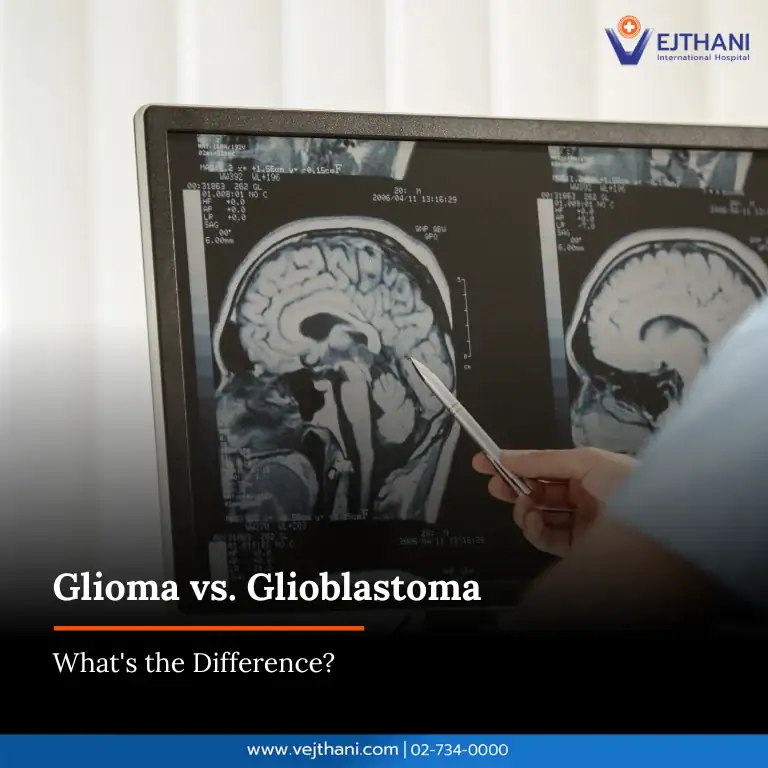
MRI Scan: This is the first step. An MRI provides a detailed picture of the brain. Low-grade gliomas may look like distinct masses, while glioblastomas often look like irregular shapes with “tentacles” invading nearby tissue.
Biopsy: This is the definitive test. A surgeon removes a small sample of the tumor tissue. A pathologist examines the cells under a microscope and tests their molecular genetics.
The biopsy confirms the Grade (1 through 4). If the cells are dividing rapidly and have dead tissue (necrosis) and extra blood vessel growth, the diagnosis is confirmed as Grade 4 Glioblastoma.
Glioma vs. Glioblastoma: Key Differences
To make it easier to understand, here is a breakdown of the major differences between the general category of glioma and the specific subtype of glioblastoma.
Feature
Low Grade Glioma (Grade 1-2)
High Grade Glioma (Grade 3-4)
Aggressiveness
Can be low (benign behavior) to high.
Extremely aggressive and malignant.
Growth Rate
Can be slow-growing, may remain stable for years.
Rapid growth, doubles in size quickly.
Location
Found in the brainstem, spine, or cerebral hemispheres.
Most often found in the cerebral hemispheres.
Invasiveness
Low-grade tumors may have clearer borders.
Highly invasive, extends fingers into healthy brain tissue.
Recurrence
May not return for a long time after removal.
High likelihood of recurrence.
Treatment Options
The main reason the distinction of glioma vs. glioblastoma matters is treatment planning.
Treating Low-Grade Gliomas
If the tumor is slow-growing and in a difficult spot, doctors might opt for “watchful waiting” with regular MRIs. If treatment is needed, it usually involves surgery to remove the tumor. Radiation or chemotherapy may be used, but not always immediately.
Treating Glioblastoma
Because of its aggressive nature, glioblastoma requires an immediate and aggressive “multimodal” approach. This typically includes:
Surgery: To remove as much of the tumor as safely possible (debulking).
Radiation Therapy: High-energy beams to kill remaining cancer cells.
Chemotherapy: Usually an oral medication (like temozolomide) taken during and after radiation.
Targeted Therapy: Newer drugs that attack specific abnormalities within cancer cells.
Personalized Recovery at Vejthani International
At Vejthani International Hospital, we recognize that the journey to recovery depends heavily on the specific nature of your diagnosis, which is why understanding the nuances of glioma vs. glioblastoma is central to our treatment planning. Our multidisciplinary team collaborates to create a personalized care pathway that addresses the distinct challenges of your specific tumor type. From advanced surgical interventions to tailored rehabilitation and compassionate, language-specific support for our international patients, we are dedicated to maximizing your quality of life and ensuring you never walk this path alone.
Frequently Asked Questions
Are they hereditary?
Generally, no. Most cases of glioma vs. glioblastoma are sporadic, meaning they happen by chance. Only a very small percentage are linked to hereditary genetic syndromes.
Can they be completely cured?
Low-grade gliomas can often be surgically removed and patients may remain disease-free for many years. Glioblastoma is much harder to cure completely because it invades surrounding tissue microscopically. The goal of treatment is to extend survival and maintain quality of life for as long as possible.
How long can you live with glioblastoma?
Prognosis varies by age, health, and tumor genetics. Historically, the median survival for glioblastoma is around 15 months with standard treatment. However, advances in surgery and clinical trials are helping some patients live longer with better quality of life.
We use cookies to manage your personal information in order to provide you with the best personalized user experience on our website. If you continue using the website, we assume that you accept all cookies on the website. Find out more.