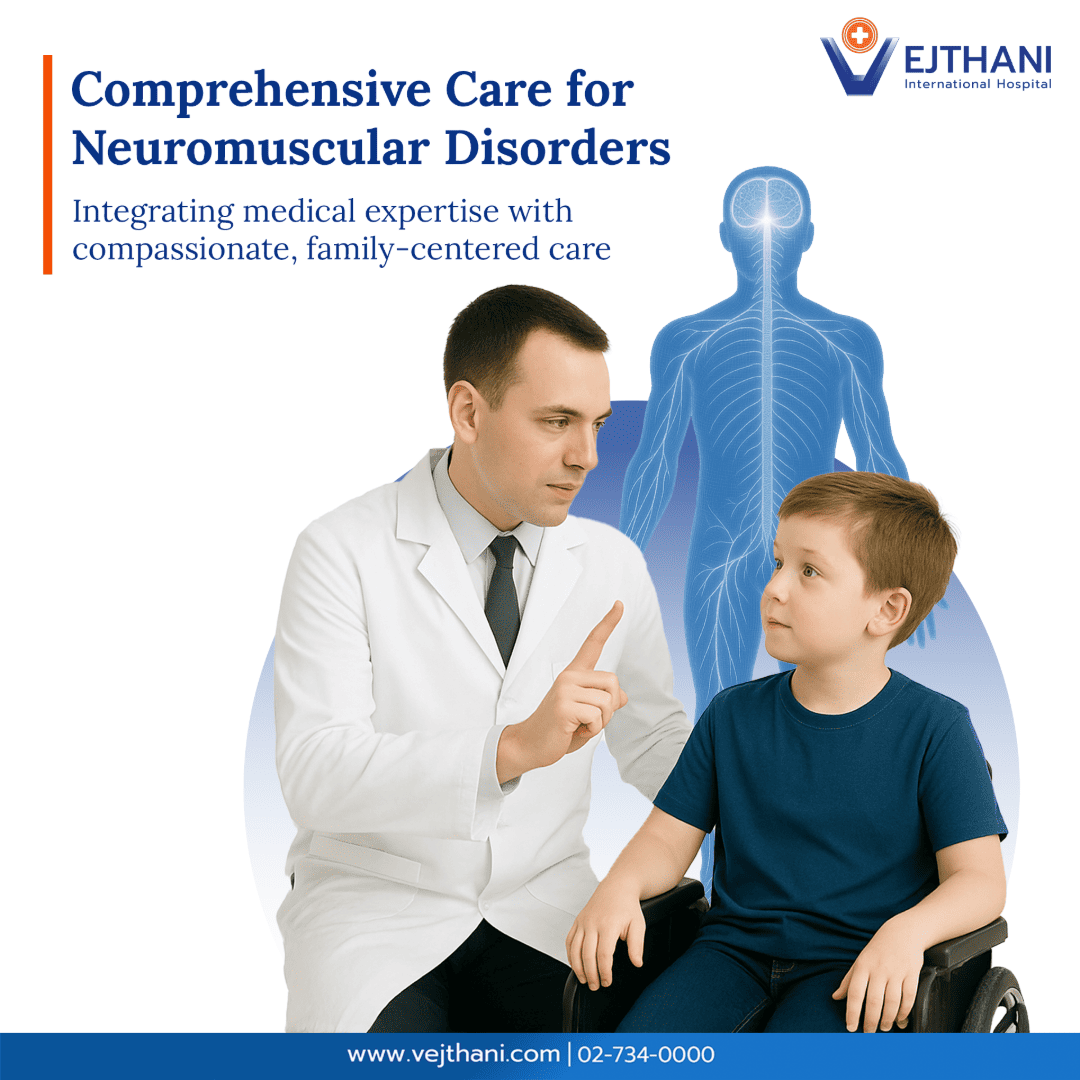
Comprehensive Care for Neuromuscular Disorders

Health Articles

Integrating advanced medical expertise with compassionate, family-centered care

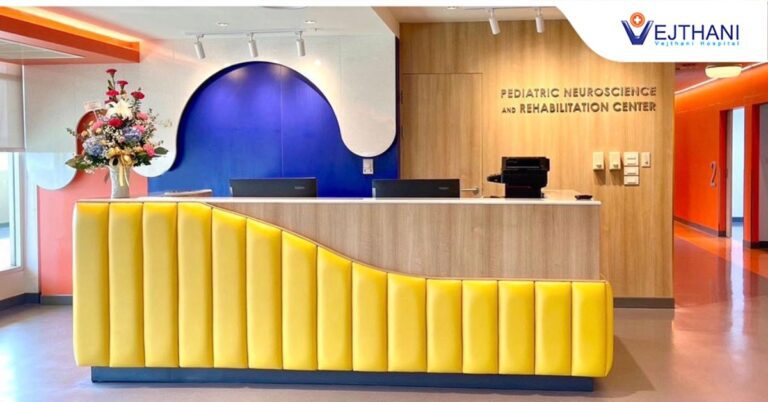
At our Pediatric Neuroscience and Rehabilitation Center, we are dedicated to helping children with neuromuscular disorders — conditions that affect the peripheral nervous system, neuromuscular junction, and muscles. These disorders may lead to muscle weakness, reduced endurance, joint contractures, scoliosis, and difficulties with mobility or daily activities.

Why Families Choose Our Center

  • Integrated multidisciplinary clinics — medical, rehabilitation, and support services in one location
  • Individualized 1:1 therapy with weekly evaluations and adjustments to the plan
  • State-of-the-art facilities, including motion analysis labs, robotic rehabilitation systems, and hydrotherapy pools
  • Family-centered care, where parents are active partners in the rehabilitation process
  • Access to research and clinical trials, bringing the latest innovations directly to our patients

Common Conditions We Treat

We care for children with a variety of neuromuscular disorders, including:

  • Muscular Dystrophies (Duchenne, Becker, limb-girdle) — progressive genetic disorders causing muscle fiber degeneration and weakness.
  • Spinal Muscular Atrophy (SMA) — a genetic motor neuron disease leading to severe hypotonia and muscle atrophy.
  • Congenital Myopathies — present at birth with low muscle tone, weakness, and delayed motor milestones.
  • Hereditary Neuropathies — affecting sensation and motor control, leading to instability and weakness.
  • Myasthenia Gravis — an autoimmune condition with fluctuating muscle weakness.
  • Inflammatory Myopathies — muscle inflammation causing pain, fatigue, and weakness.

Signs & Symptoms to Watch For

Parents and caregivers should be aware of early warning signs, which may include:

  • Delayed motor milestones, such as rolling, sitting, or walking later than expected
  • Low muscle tone (“floppiness”) or excessive muscle stiffness
  • Frequent falls, unusual gait patterns, or toe walking
  • Weakness in facial, respiratory, or swallowing muscles
  • Muscle cramps, fatigue, or exercise intolerance
  • Gradual loss of previously learned skills

Our Diagnostic Approach

An accurate and early diagnosis is critical to guide targeted treatment. We use a combination of advanced testing, including:

  • Electromyography (EMG) & Nerve Conduction Studies (NCS) to measure muscle and nerve activity
  • Genetic testing panels to identify underlying mutations
  • Muscle biopsy for microscopic evaluation of muscle fibers
  • MRI & ultrasound to assess muscle structure and detect inflammation or fatty changes
  • Pulmonary function testing to monitor respiratory strength
  • Cardiac evaluations to detect heart involvement in certain muscular dystrophies
  • Orthopedic and spine assessments
  • Swallowing and chewing evaluations
  • Developmental evaluation
  • Comprehensive eye and ear examinations

Rehabilitation & Management Strategies

Physical Therapy

  • Strength and endurance training
  • Stretching to prevent contractures
  • Gait training, including robotic-assisted walking devices
  • Aquatic therapy for low-impact muscle conditioning

Occupational Therapy

  • Training for self-care and daily living activities
  • Improving fine motor skills and hand function
  • Recommendations for orthoses and adaptive devices

Speech & Swallow Therapy

  • Oral-motor strengthening exercises
  • Dysphagia management and safe feeding strategies
  • Communication tools for speech impairment

Respiratory Therapy

  • Airway clearance techniques
  • Non-invasive ventilation support when required
  • Breathing exercises to preserve lung function

Medical Management

  • Disease-modifying medications (e.g., corticosteroids, targeted therapies)
  • Immunotherapy for autoimmune conditions
  • Nutritional counseling for optimal muscle health

Our approach combines cutting-edge diagnostics, evidence-based therapies, and the expertise of a multidisciplinary team to help each child reach their maximum functional potential and enjoy the highest quality of life.

If you suspect your child may have a neuromuscular disorder, early evaluation can significantly improve outcomes.

We believe that with the right combination of expert care, advanced technology, and strong family support, every child with a neuromuscular disorder can achieve more than anyone thought possible.

For more information, contact

Pediatric Neuroscience and Rehabilitation Center, Vejthani Hospital
Call 02-7340000 or Ext. 2332
English Hotline: (+66)8-522 38888

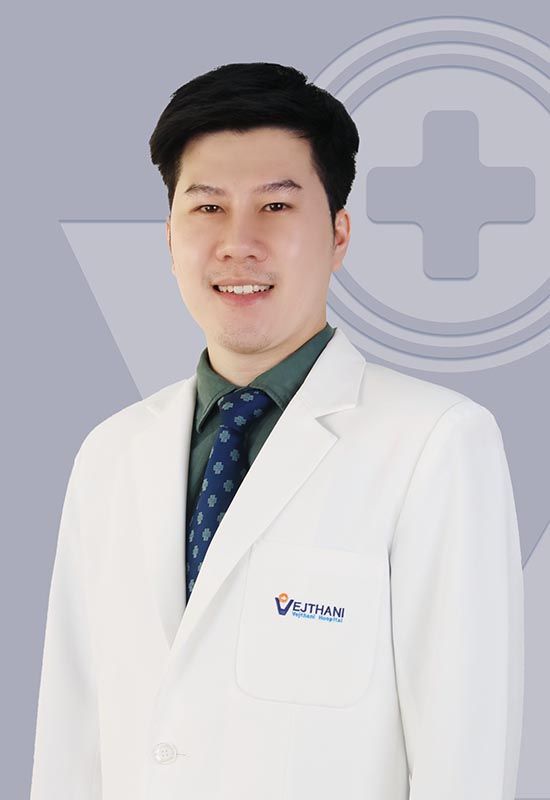
Medically Reviewed by

DR. SUPACHAI LAOHAPONGSOMBOON

Pediatrics

Pediatrics Neurology

Readers’ Rating

5.0 out of 5 stars (based on 1 review)