Hemorrhoid Grades 1–4: Why Surgery Is Not Always the Answer
Internal hemorrhoids are graded into 4 different categories according to the severity of the disease. Grade 1 The hemorrhoids or the swollen veins bulge inside
Select Topic
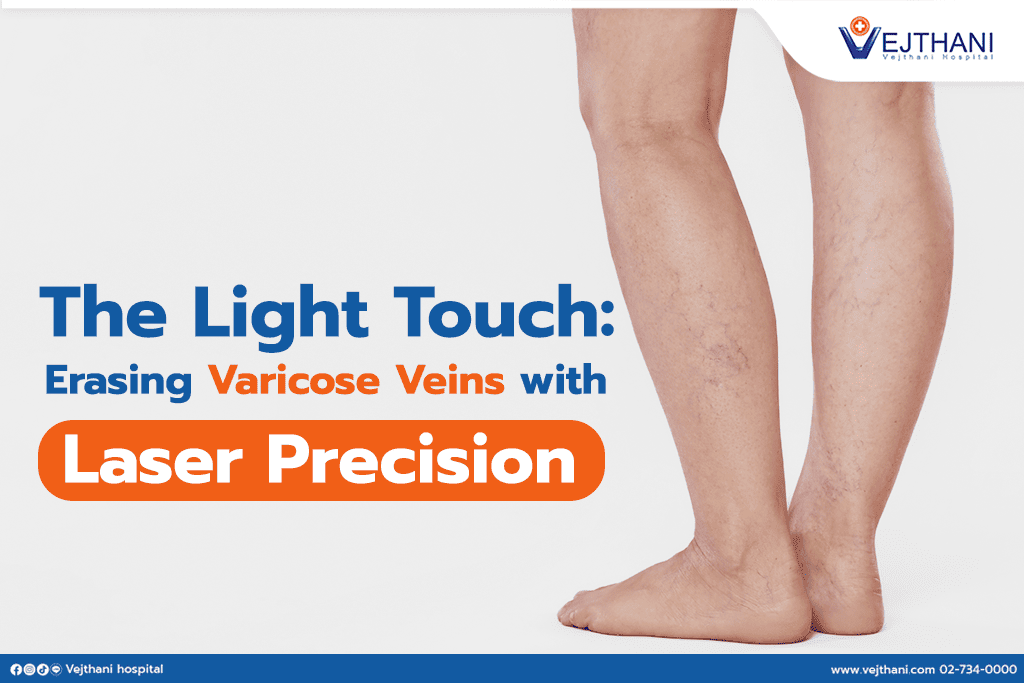
Varicose veins are not just a cosmetic issue; they could also cause pain, swelling, and heaviness in the legs. If left untreated, they may lead to complications. Laser treatment is one of the safe and effective options for treating varicose veins, offering quick recovery and restoring smooth skin.
Dr. Supachai Chanvitan, a vascular surgeon at Vejthani Hospital, explained that varicose veins are dilated, twisted veins near the skin surface. They appear as bulging, serpentine veins due to blood accumulation, often visible as green or deep purple. While they can occur in various parts of the body, such as the esophagus, uterus, pelvis, and anus, they most commonly affect the legs or feet.
Varicose veins can arise from several factors, including aging, genetics, prolonged sitting or standing, impact or compression, obesity, and wearing high heels for extended periods. These factors impair blood circulation, leading to blood pooling in the veins and resulting in varicose veins. These veins can appear as bulges or spider-like veins. There are two main types of varicose veins:
Treatment for varicose veins varies depending on the severity and size of the affected veins. One effective method is minimally invasive surgery using laser or radiofrequency ablation. This precise and safe technique involves inserting a small catheter into the vein and using laser or radiofrequency to heat and diminish the affected vein, causing it to shrink. This method minimizes damage to surrounding skin and tissue, reducing the risk of scarring. The procedure takes about 45 to 60 minutes, and patients can return home immediately afterward.
To prevent varicose veins, individuals should avoid prolonged standing or sitting, refrain from wearing tight clothing or stockings, limit the use of high heels, and engage in regular exercise to improve circulation. While varicose veins may not always be dangerous, if left untreated, they can lead to complications such as chronic leg ulcers, skin inflammation, venous rupture, or deep vein thrombosis. If you notice symptoms, it is essential to consult a medical specialist for proper diagnosis and treatment before the condition affects your quality of life.
Surgery Center, Vejthani Hospital
Call: (+66)2-734-0000 Ext. 4500, 4501
English Hotline: (+66)85-223-8888