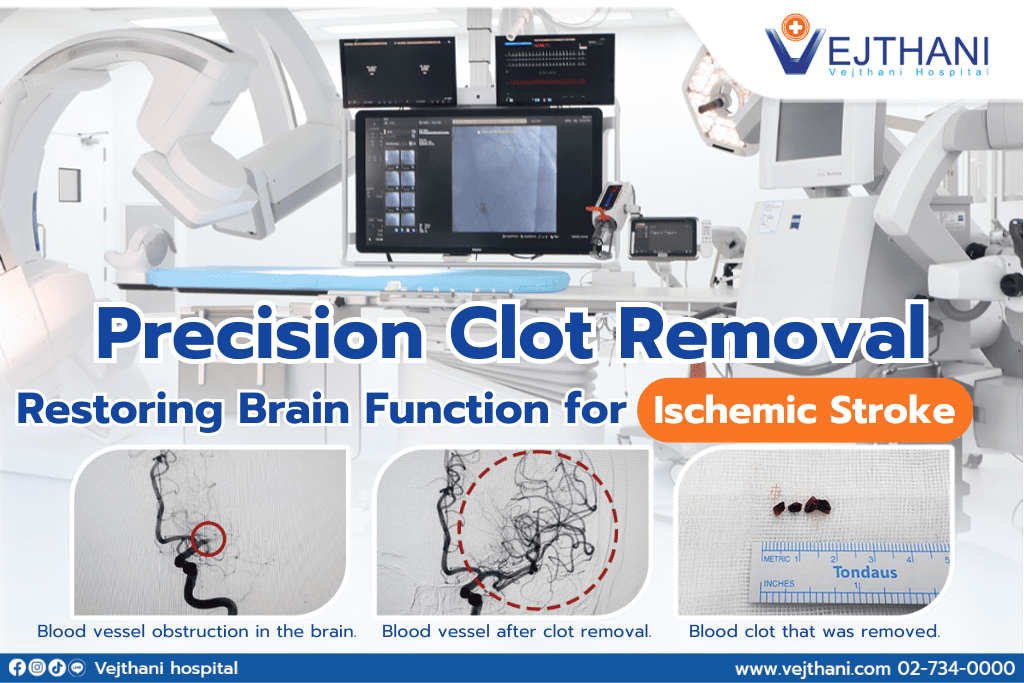
Precision Clot Removal to Restore Brain Function in Ischemic Stroke
Health Articles
Select Topic
Numbness in the hands and feet, facial drooping, and slurred speech are the symptoms that may be warning signs of ischemic stroke, a life-threatening condition that affects a large number of people around the world and can lead to severe consequences, including paresis or paralysis, if not treated in time.
Dr. Pongsakorn Pongsapas, a neurosurgeon at Vejthani Hospital, explained that ischemic stroke is a medical emergency caused by a blood clot or blockage that disrupts blood flow to the brain. When blood flow to the brain is blocked, brain tissue is deprived of oxygen and nutrients, resulting in potential brain cell damage and resulting in symptoms like weakness, numbness on one side of the body, slurred speech, double vision, vision loss, dizziness, loss of balance, or sudden, severe headaches without a clear cause. Without timely intervention, an ischemic stroke can lead to permanent brain damage, resulting in paralysis or even death. Advanced clot retrieval procedures, using technologies like Biplane DSA (Digital Subtraction Angiography), greatly enhance recovery outcomes by ensuring precise and effective clot removal.
The causes of ischemic stroke can result from various factors, including:
Hypertension is the primary cause, as it can damage blood vessel walls and promote clot formation.
Diabetes and hyperglycemia can lead to blood vessel damage and atherosclerosis.
Hyperlipidemia can lead to the build-up of fatty deposits in the walls of the arteries, increasing the risk of clots.
Lifestyle factors such as smoking, alcohol consumption, and a high-fat diet significantly increase the risk of blockages in blood vessels.
Currently, ischemic stroke treatment involves a technique called thrombectomy, which is a highly effective method for removing blood clots from arteries. This procedure is performed by neurologists who insert a tiny catheter through the groin to precisely remove the blood clot from the blocked artery in the brain.
The state-of-the-art technology that enhances the effectiveness of this procedure is Biplane DSA, which is a dual-view imaging technique that provides apparent, multidimensional views of blood vessels in the brain. Biplane DSA enables neurosurgeons to accurately and safely locate and remove the clots.
Vejthani Hospital has a specialized team of neurologists that performs clot retrieval utilizing Biplane DSA to enhance precision and minimize procedural risks, ensuring patients receive comprehensive, top-quality care.
Benefits of Clot Retrieval Using Biplane DSA:
Reduces brain damage: Rapid clot removal minimizes oxygen deprivation and prevents further brain cell damage.
Enhances recovery chances: Early intervention improves the chances of restoring brain and body function.
Minimizes risk of additional damage to Brain Tissue: The precision of Biplane DSA reduces the risk of damaging surrounding brain tissue.
Shortens treatment time: Biplane DSA provides faster clot removal, reducing overall treatment time and enhancing recovery for patients.
Clot retrieval is an effective treatment for patients who arrive at the hospital within 4-6 hours of symptom onset. Receiving treatment during this period offers the highest chance of recovering brain function.
If you experience symptoms of ischemic stroke, seek medical attention immediately. Timely treatment with advanced technologies significantly increases the potential for recovery and reduces life-threatening risks.
For more information, please contact
Neuroscience Center, Vejthani Hospital Call: (+66)2-734-0000 Ext. 5400 English Hotline: (+66)85-223-8888
We use cookies to manage your personal information in order to provide you with the best personalized user experience on our website. If you continue using the website, we assume that you accept all cookies on the website. Find out more.