Make an Appointment
 Talk to Doctor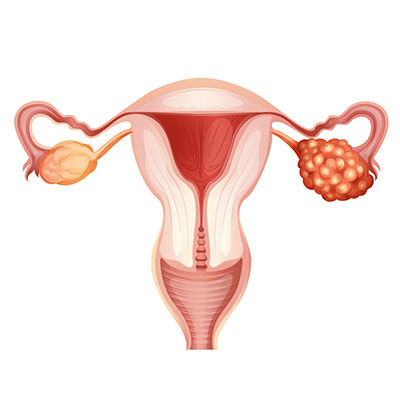
Overview
Ovarian cancer is a type of cancer that affects the ovaries. The ovaries are part of the female reproductive system which produce eggs, and hormones such as estrogen and progesterone. Abnormal growth of ovary cell could mutate and transform into a tumor cell of the ovary.
Most ovarian cancer will be treated by surgical removal of the tumor and chemotherapy.
Different types of ovarian cancer
The types of ovarian cancer are determined by the type of cells they come from. The treatment options will depend on the types of ovarian cancer.
Types of ovarian cancer are:
- Epithelial ovarian tumors. Is the most common type of ovarian cancer. This cell type developed at the outer surface of the ovaries. These could be benign or malignant tumors.
- Ovarian germ cell tumor. Developed at the ova (eggs), this is the cancer that could develop in young woman and mostly benign; however, some tumors could be life-threatening if left untreated.
- Ovarian stromal tumor. Is a rare type of ovarian tumor that usually present with abnormal vaginal bleeding. Commonly diagnosed at earlier stages.
Symptoms
Early stage of ovarian cancer may not present any noticeable signs or symptoms until the disease has progress, These are the symptoms of ovarian tumors:
- Abdominal pain, bloating, or discomfort at the pelvic area.
- Lump or change in size of the abdomen
- Abnormal vaginal bleeding
- Loss of appetite
- Unexplained weight loss
- Change in bowel habit
- Frequent urination
If you notice any of these symptoms, consult the gynecologist.
Causes
The cause of ovarian cancer is unknown but there are many risk factors that increase the risk of developing ovarian tumor. Generally, cancer starts when the cell’s DNA mutates. This mutation causes the cells to grow and divide rapidly outliving the healthy cells, and later on forms a tumor which can invade surrounding tissue or spread to other part of the body.
Risk factors
Factors that may increase ovarian cancer risk includes:
- Age: Older age, puts people at risk of developing ovarian cancer.
- Family History: First-degree relative (mother, sister or daughter) had ovarian cancer.
- Genes: If you have genes that you have inherited from your parents such as BRCA1 and BRCA2, these also increased risk of breast cancer.
- Obesity: People who are overweight or obese have higher risk to develop ovarian cancer.
- Age of menstruation: Early menstruation or late menopausal may increase the risk of having ovarian cancer.
- No pregnancy: Person who never had been pregnant have higher risk to develop ovarian cancer.
Diagnosis
In order to diagnose ovarian cancer, the following procedures may be recommended:
- Pelvic examination: An examination of the genitals will be done. Index and middle finger will be inserted into the vagina while pressing the other hand on the abdomen to feel the uterus and ovaries. A speculum device will be inserted to examine the vagina to look for any abnormalities of the cervix and vagina.
- Diagnostic Imaging Procedure: includes ultrasound, Computerized Tomography (CT), Magnetic Resonance Imaging (MRI), and Positron Emission Tomography (PET). This is to determine the extent of the cancer as well as the size, shape and structure of the ovaries.
- Blood test: different kind of blood test will be investigated by the specialist to determine the function of the organs.
Staging
Once the specialist confirmed the diagnosis of ovarian cancer, then the following step is to know the extent (stage) of the cancer. The stages of cancer are indicated by Roman numerals ranging from I to IV. The lowest stage indicates a cancer is isolated at the ovaries. The highest stage – stage IV – indicates that the cancer had spread to other part of the body (metastasis).
Treatment
The type, and stage of cancer are factors which will determine the choice of treatment to apply aside from the general health and personal choice of treatment. Treatment options would be discussed with the specialist.
Treatment for ovarian cancer is usually done by the surgical removal of the ovaries. However, if the cancer had advanced to other part of the body, then additional treatment is needed.
Surgery
- Fertility sparing surgical staging: in early stage of disease depend on cell type of cancer
- Complete surgical staging: hysterectomy, bilateral salpingo-oophorectomy, lymph node dissection, omentectomy.
Chemotherapy
- Chemotherapy: Chemotherapy uses medication containing chemicals that kill cancer cells, administered orally or intravenously. It is usually used after surgery to kill any remain cancer cell but it can also used before surgery to reduce the extention of the cancer.
- Targeted drug therapy: used in the treatment of advanced cancer. This therapy could be done alone with radiation therapy.
- Immunotherapy: helps the body immune system to fight against the disease by interfering with the hindering process of the tumor cell from the body’s defense.
- Hormone therapy: uses drugs that stop or block the hormone estrogen. The therapy could be used in some cell type of ovarian cancer.