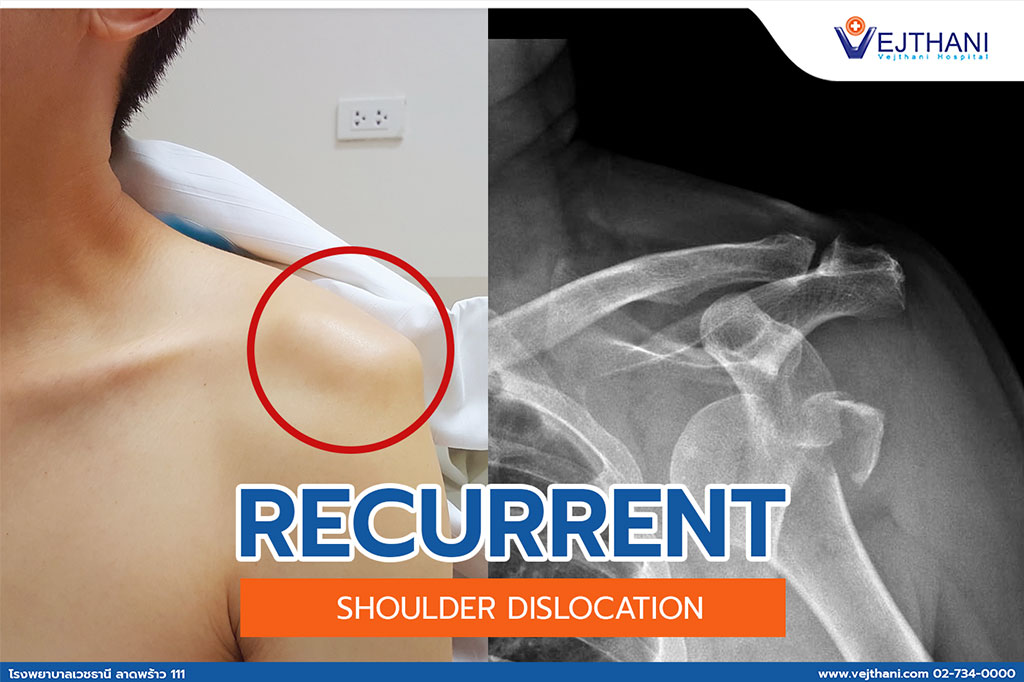
Dislocated Shoulder: Understanding Recurrent Shoulder Dislocation and Modern Treatment Approaches
Health Articles
Select Topic
A dislocated shoulder is a common orthopedic injury that occurs when the upper arm bone moves out of the shoulder socket. While many cases can be successfully treated after the initial injury, some individuals may develop recurrent instability, leading to repeated dislocations that affect mobility, daily activities, and overall joint function.
At the Orthopedics Center at Vejthani International Hospital, sports medicine orthopedic surgeons will evaluate and manage shoulder instability.
Dr. Ratthapoom Watcharopas is an orthopedic specialist in Sports Medicine and Shoulder Joint Surgery, with clinical expertise in treating shoulder instability and recurrent shoulder dislocations. He focuses on comprehensive assessment, arthroscopic shoulder techniques, and individualized treatment planning to restore joint stability and support functional recovery.
What Is a Dislocated Shoulder?
A dislocated shoulder occurs when the head of the humerus (upper arm bone) is displaced from the glenoid socket of the shoulder blade. The shoulder joint has a wide range of motion, which also makes it more prone to instability than other joints.
Common causes include:
Falls or direct trauma
High-impact sports injuries
Activities involving overhead arm movements
Patients experiencing a dislocated shoulder may report severe pain, limited movement, and visible joint deformity.
Why is the shoulder joint prone to Dislocation?
The shoulder is designed for mobility rather than stability. Its shallow socket allows extensive movement but relies on surrounding soft tissues, such as ligaments, muscles, and cartilage structures for support.
In certain situations, trauma or repeated stress may compromise these stabilizing structures, increasing the risk of recurrent dislocation.
Understanding Recurrent Shoulder Dislocation
Recurrent shoulder dislocation refers to repeated episodes of instability after an initial injury. Recurrent instability may occur due to:
Damage or tearing of stabilizing structures within the joint
Weakness or imbalance in the surrounding muscles
Structural changes following the first dislocation
Some patients may experience dislocation even after minor movements or low-impact incidents once instability develops.
Symptoms that May Indicate Shoulder Instability
Symptoms can vary depending on severity and individual factors, but may include:
Repeated episodes of the shoulder slipping out of place
Persistent discomfort during movement
Reduced range of motion
Weakness or instability during overhead activities
A comprehensive evaluation by an orthopedic specialist is necessary to determine the underlying cause.
Medical Evaluation at the Orthopedics Center, Vejthani International Hospital
Medical History and Physical Examination
Orthopedic doctors assess how the injury occurred, how often the joint feels unstable, and how it affects everyday life.
Imaging and Diagnostic Assessment
Imaging studies, such as X-rays and advanced scans (MRI), may be used to assess bone alignment, soft tissue injury, and joint stability.
Functional Assessment
Doctors carefully assess your muscle strength, joint mobility, and the functional demands of your daily activities. This comprehensive evaluation enables them to design a treatment plan according to your needs.
This team-based approach reflects real-world medical practice and places strong emphasis on personalized, patient-centered care.
Treatment Approaches for Dislocated Shoulder
Treatment options depend on factors such as patient age, activity level, injury severity, and risk of recurrence.
Non-Surgical Treatment
For certain patients, conservative management may be considered, including:
Immobilization and support devices
Rehabilitation and physiotherapy programs aimed at strengthening and stabilizing muscles
These approaches may help restore function and reduce instability in selected cases.
Surgical Treatment Options
When recurrent instability is present or structural damage is significant, surgical intervention may be discussed.
Latest techniques, such as shoulder arthroscopy, allow surgeons to access the joint through small incisions to repair damaged structures. This minimally invasive approach is designed to support stability while minimizing tissue disruption.
Decisions regarding surgery are individualized following detailed consultation with an orthopedic specialist.
Potential Benefits and Considerations
Possible Benefits
Improved joint stability
Reduced frequency of dislocation episodes
Allowing return to daily activities or sports
Important Considerations
All surgical procedures carry potential risks, and outcomes vary among individuals. Recovery timelines, rehabilitation requirements, and long-term expectations should be discussed with the doctor.
Preventing Future Shoulder Instability
While not all cases are preventable, prevention may include strengthening surrounding muscles, improving movement, and addressing underlying issues under professional supervision.
Consultation with an orthopedic specialist is recommended if:
Shoulder dislocations occur repeatedly
Pain or instability interferes with daily activities
There is a loss of motion or a functional limitation
FAQ: Dislocated Shoulder and Recurrent Instability
What causes a dislocated shoulder?
Common causes include trauma, sports injuries, or activities involving sudden force or overhead movements.
Can a dislocated shoulder happen more than once?
Yes. Damage to stabilizing structures may lead to recurrent shoulder dislocation in some individuals.
Is surgery always required?
No. Treatment depends on medical evaluation, severity of instability, and patient-specific factors.
How is recurrent shoulder dislocation diagnosed?
Diagnosis typically involves medical examination and imaging studies to evaluate joint structures.
For more information, please contact
Orthopedics Center, 2nd Floor, King of Bones Building, Vejthani Hospital Call +66 (0) 2734-0000 ext. 2298,2299 +66(0)85-223-8888 (English Hotline)
We use cookies to manage your personal information in order to provide you with the best personalized user experience on our website. If you continue using the website, we assume that you accept all cookies on the website. Find out more.