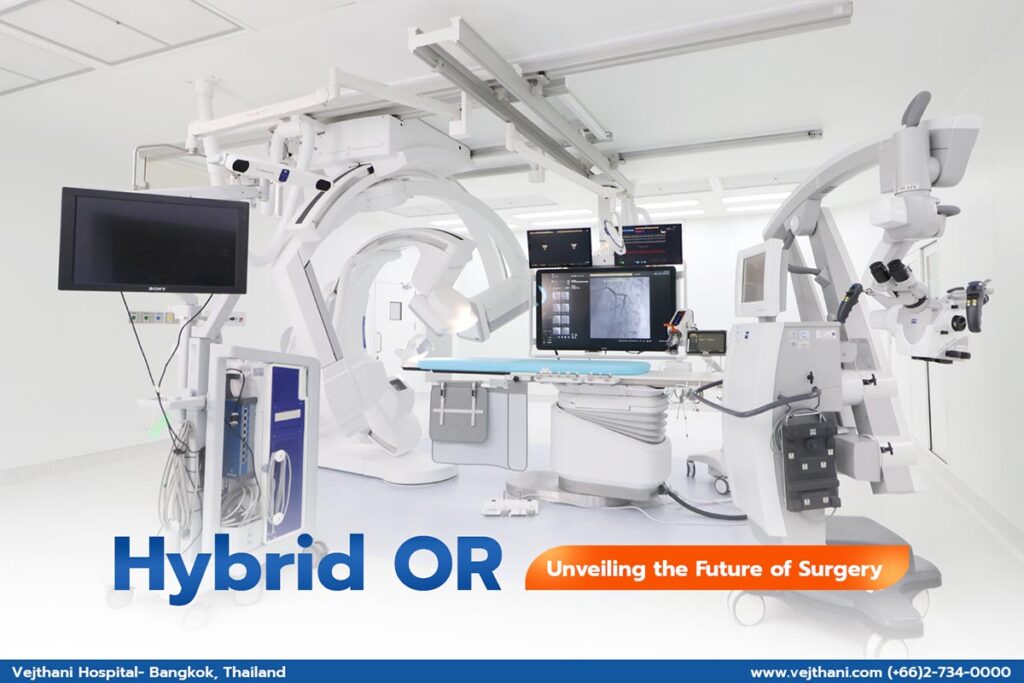
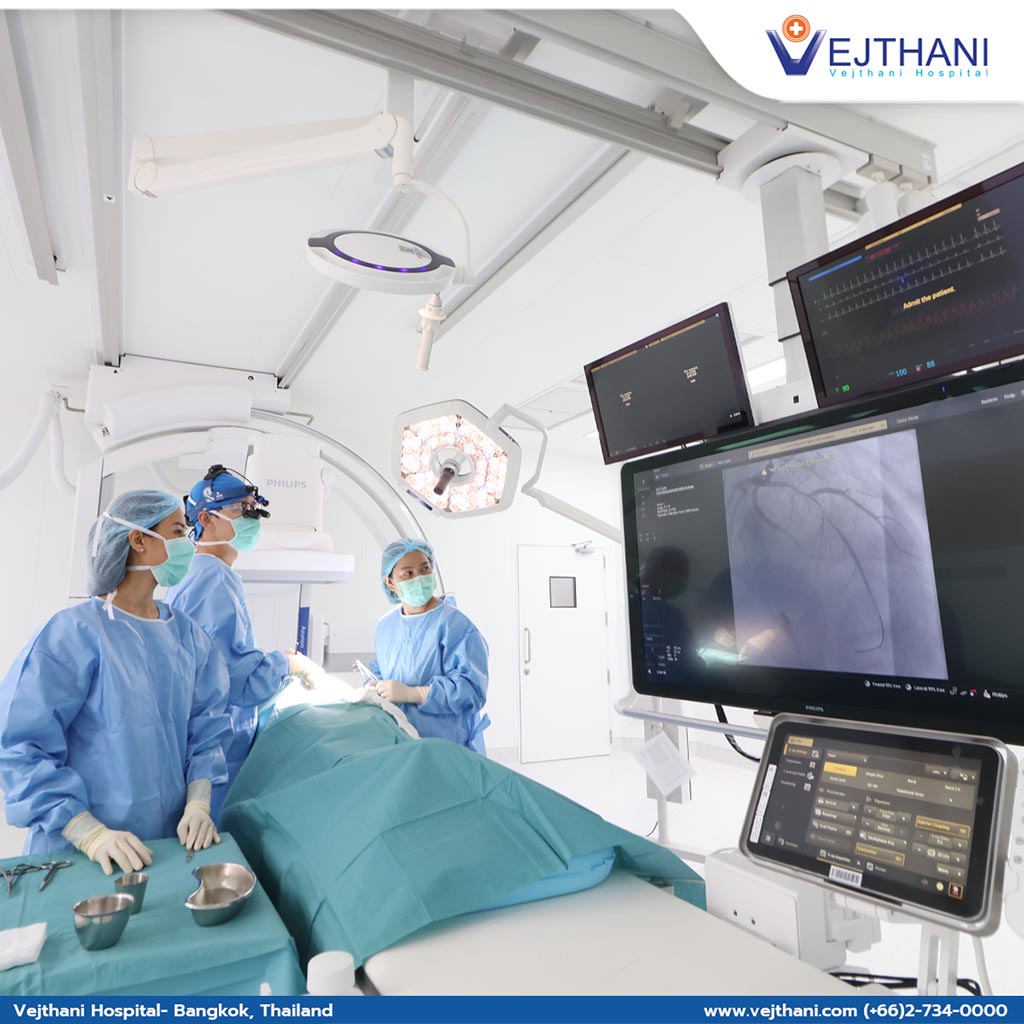
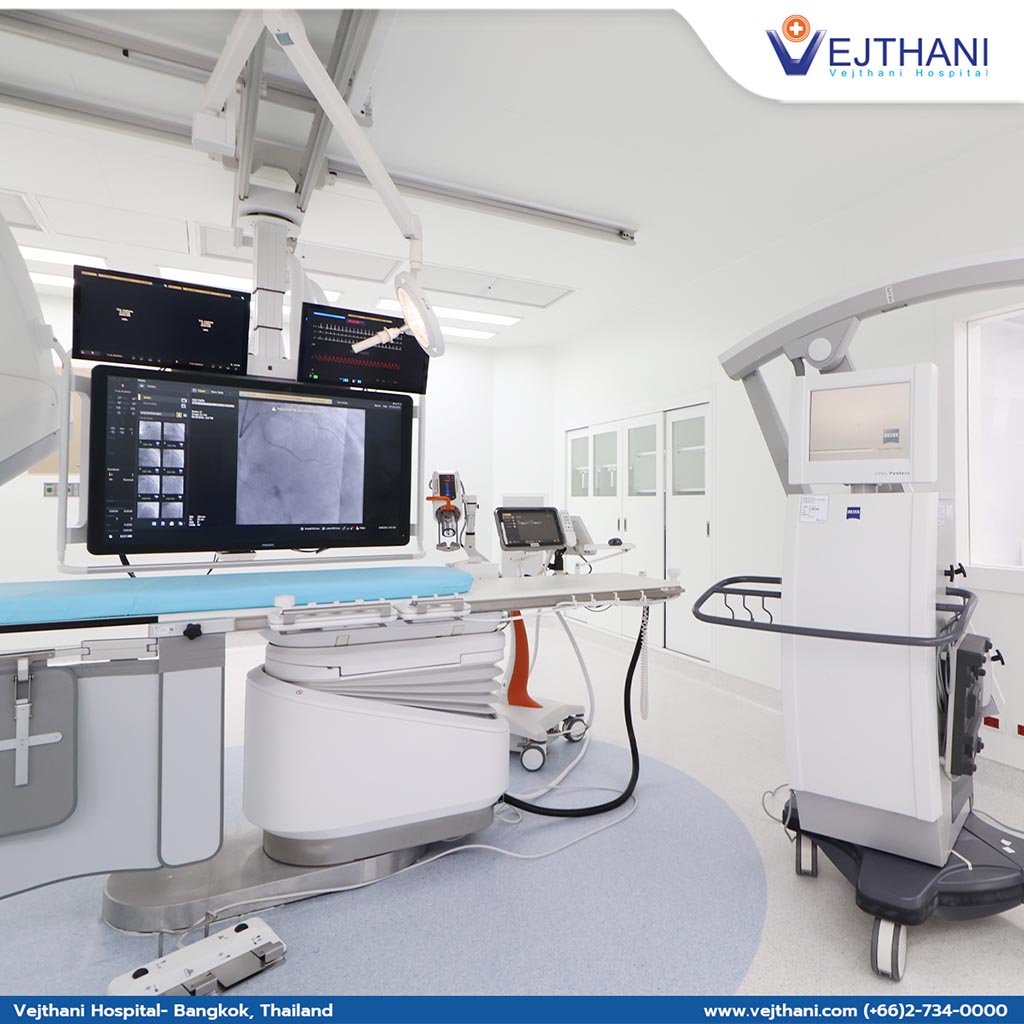

A Hybrid Operating Room (Hybrid OR) is a surgical room that combines the features of a traditional Operating Room (OR) and an interventional radiology suite, which includes advanced medical imaging technologies such as Computed Tomography (CT), fluoroscopy, Magnetic Resonance Imaging (MRI), ultrasound, and C-arm, which is a portable X-ray machine that rotates around the patient. These advanced imaging technologies allow surgeons to perform a broader range of procedures while having real-time visualization of the patient’s anatomy, enabling surgeons to perform minimally invasive interventions with greater precision and accuracy.
Hybrid ORs are used for a variety of procedures, including:
Heart valve repair or replacement
Carotid endarterectomy (removes plaque from the carotid artery)
Tumor removal
Spinal surgery
Liver surgery
Kidney surgery
Vascular surgery
Hybrid ORs are still a relatively new technology but are becoming increasingly popular. They offer several advantages over traditional ORs, including:
Enhanced precision and accuracy: Incorporating advanced imaging technology within hybrid operating rooms allows surgeons to observe the patient’s internal anatomy in real-time, which helps them to plan and perform procedures more precisely. This can result in improved outcomes for patients.
Reduced risk of complications: Using minimally invasive techniques in hybrid ORs can help diminish the risk of infection and bleeding, resulting in a shorter recovery time.
Increased flexibility: Hybrid ORs can be used to perform multiple types of procedures than traditional operating rooms. This can be beneficial for patients who need complex or specialized care.
Key features of a hybrid OR include:
Advanced Imaging Equipment: A hybrid OR is equipped with high-quality medical imaging equipment that provides real-time images of the patient’s anatomy during surgery, enabling the medical team to monitor the surgery as it progress and make adjustments as needed.
Integration of Technology: Hybrid ORs are designed to integrate various imaging systems seamlessly with surgical tools and equipment. This integration facilitates efficient communication and coordination among the surgical team members.
Collaborative Environment: The hybrid OR is equipped to support multidisciplinary collaboration. Surgeons, radiologists, anesthesiologists, and other specialists can work together in real-time to make informed decisions during complex procedures.
Reduced Radiation Exposure: The availability of advanced imaging techniques can reduce the need for separate pre-operative imaging sessions, minimizing radiation exposure for the patient.
Complex Cardiovascular and Neurosurgical Procedures: Hybrid ORs are often used for complex cardiovascular and neurosurgical interventions, such as angioplasty, stent placement, valve replacement, and intricate brain surgeries.
Training and Research: Hybrid ORs also serve as valuable medical training and research tools. They provide a controlled environment for medical professionals to learn and practice new techniques.
A hybrid operating room represents an innovative approach to surgical care that combines cutting-edge imaging technology with surgical expertise to enhance patient outcomes and enable a wide range of intricate procedures. It is essential to talk to your doctor about whether a hybrid operating room would be a better choice than a traditional operating room.
We use cookies to manage your personal information in order to provide you with the best personalized user experience on our website. If you continue using the website, we assume that you accept all cookies on the website. Find out more.