What Numbness Location Says About Your Nerves
Numbness of the thumb, point-finger, middle-finger, and ring-finger (Half part of the ring-finger): This might be a sign of pinched nerve in the hand (Carpal tunnel syndrome)
Select Topic
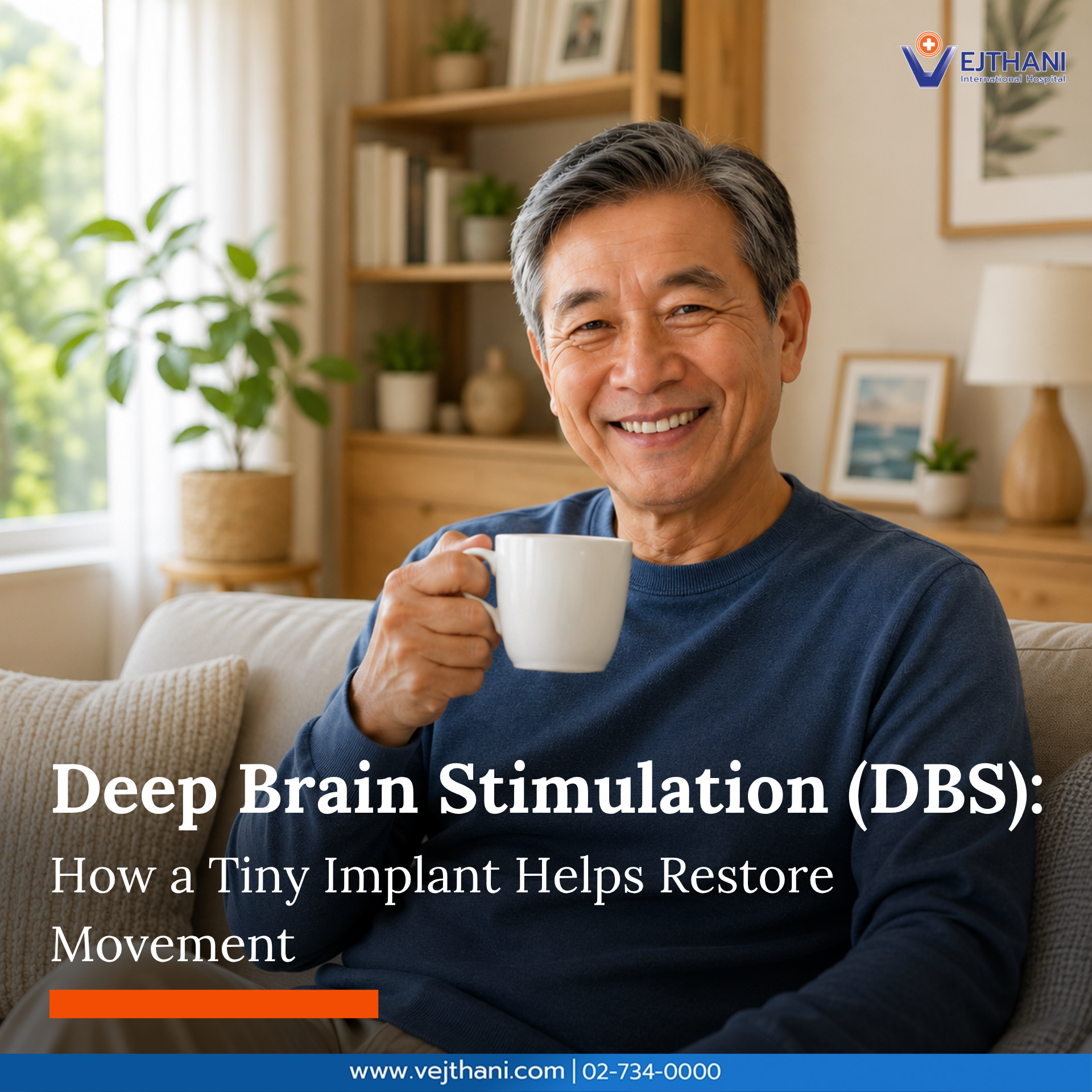
What is DBS Surgery (Deep Brain Stimulation) When tremors, muscle stiffness, and movement difficulties begin to interfere with daily life, DBS surgery may offer a new treatment option. This advanced procedure can help relieve symptoms associated with Parkinson’s disease, Essential Tremor and other neurological conditions by targeting specific areas of the brain.
DBS (Deep Brain Stimulation) is an advanced surgical procedure that involves implanting a small electrical stimulation device in specific areas of the brain to help regulate abnormal neural activity. It can help relieve symptoms such as tremors, muscle stiffness, slowed movement, and involuntary movements. Deep brain stimulation surgery is most commonly used to treat people with Parkinson’s disease, Essential Tremor, and certain neurological conditions when medications alone are no longer able to provide adequate symptom control.
DBS surgery works like a “pacemaker for the brain.” It uses controlled electrical stimulation to help regulate abnormal brain activity associated with movement disorders.
DBS surgery is typically performed in separate stages to ensure accuracy and safety.
Using advanced imaging techniques such as MRI or CT scans, the neurosurgeon identifies the precise areas of the brain involved in movement control. Thin electrodes are then implanted into the targeted brain regions. In many cases, patients remain awake under local anesthesia so the surgical team can monitor brain function and confirm accurate electrode placement throughout the procedure.
During a separate procedure, a small pulse generator (the battery that powers the DBS system) is implanted under the skin near the collar bone or chest under general anesthesia. The electrodes in the brain are connected to the device through extension wires placed beneath the skin.
A few weeks after surgery, a specialist activates and programs the DBS device to optimize symptom control. The stimulation settings can then be fine-tuned over time to adapt to each patient’s evolving needs.
In general, DBS surgery may benefit patients whose symptoms can no longer be adequately controlled with medication alone. Doctors commonly recommend Deep Brain Stimulation surgery for people with Parkinson’s disease, Essential Tremor and Dystonia that significantly affect movement, daily activities, and quality of life.
For many patients, Deep Brain Stimulation surgery can significantly improve symptom control and quality of life, particularly when medications no longer provide adequate relief. At the same time outcomes vary depending on the condition being treated and individual factors. Deep Brain Stimulation surgery has demonstrated long-term benefits in appropriately selected patients.
Some of the key benefits of Deep Brain Stimulation surgery include :
The DBS surgery success rate depends on several factors, including the patient’s condition, symptom severity, and overall health. Patients with Parkinson’s disease and Essential Tremor often experience the most significant improvements, particularly when treatment is performed at an experienced center, and patients are carefully selected.
Deep Brain Stimulation surgery is generally considered a safe and well-established procedure. However, as with any surgery, it carries risks and potential side effects. Most side effects are temporary and can often be managed by adjusting to the DBS device settings.
Although serious complications are uncommon, potential risks of Deep Brain Stimulation surgery may include :
Some patients may experience temporary side effects after surgery or during the adjustment of stimulation settings, including :
Doctors can often minimize or resolve these side effects by adjusting the DBS stimulation settings and providing ongoing follow-up care.
Recovery after Deep Brain Stimulation surgery varies from person to person. Post-operative care includes wound monitoring, device activation, and ongoing programming sessions to optimize symptom control.
A specialist typically activates the DBS device 2 to 4 weeks after surgery. Patients may require several follow-up visits during the first year to fine-tune stimulation settings and evaluate their response to treatment. Doctors may also adjust medications as symptoms improve.
Long-term follow-up with both neurologist and neurosurgeon plays an important role in achieving maximum outcome.
Patients considering DBS surgery in Thailand are recommended to choose a hospital with extensive experience in treating movement disorders and performing complex neurosurgical procedures. Successful treatment depends not only on the surgery itself but also on comprehensive preoperative evaluation, accurate electrode placement, personalized device programming, postoperative management, and long-term follow-up care.
With advanced medical technology and multidisciplinary expertise, Thailand offers international patients access to high-quality Deep Brain Stimulation surgery and comprehensive neurological care.
If you or a loved one is experiencing worsening symptoms despite medical treatment, the Neuroscience Center at Vejthani International Hospital offers comprehensive evaluation and personalized treatment planning by a multidisciplinary team of neurologists, neurosurgeons, and other specialists.
Contact Vejthani Hospital today to learn more about DBS surgery and explore the most appropriate treatment options for your condition.
Deep Brain Stimulation surgery does not cure Parkinson’s disease or other neurological conditions. However, it can help reduce symptoms, improve daily functioning, and enhance quality of life in appropriately selected patients.
The DBS surgery success rate varies depending on the condition being treated, symptom severity, and individual patient factors. Many patients with Parkinson’s disease and Essential Tremor experience significant improvements in symptom control and daily functioning following treatment.
After DBS surgery, patients attend follow-up appointments for wound monitoring, device activation, and programming. A specialist usually activates the DBS device 2 to 4 weeks after surgery and adjusts the settings over time to optimize symptom control.
In some cases, Deep Brain Stimulation surgery may help reduce the amount of medication required to manage symptoms. However, many patients continue to take medications after surgery, and treatment plans are individualized based on each patient’s needs.
Deep Brain Stimulation surgery is generally considered a safe and well-established procedure when performed by experienced specialists. As with any surgery, there are potential risks and side effects, but most can be effectively managed through careful monitoring and follow-up care.
For more information, please contact
Neuroscience Center, Vejthani International Hospital
Call: (+66)2-734-0000 Ext. 5400
English Hotline: (+66)85-223-8888