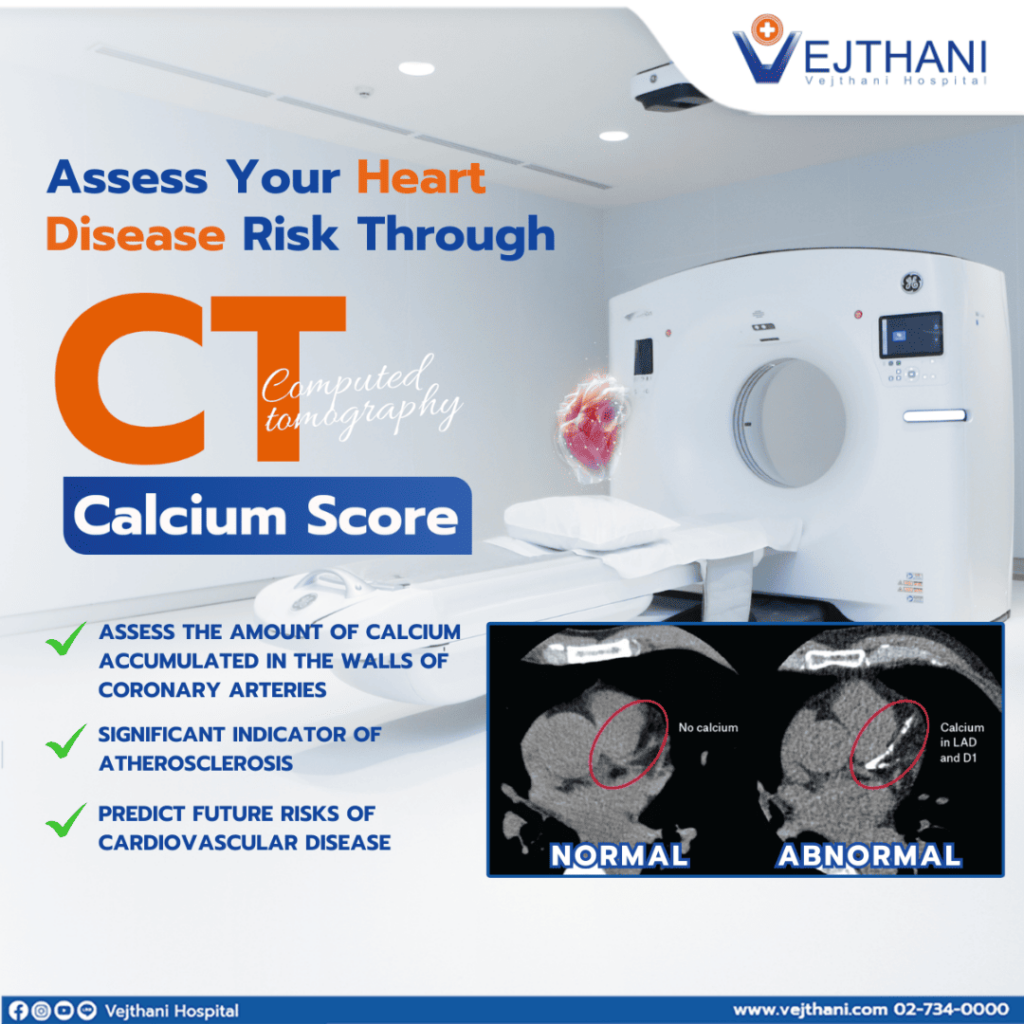
Assess Your Heart Disease Risk through the CT Calcium Score Diagnostic Test
Health Articles
Select Topic
What is CT Calcium Score?
The CT Calcium Score, also known as the Coronary Artery Calcium (CAC) Score, is a noninvasive radiological examination that uses Computed Tomography (CT Scan) to assess the amount of calcium accumulated in the walls of coronary arteries. This test serves as a significant indicator of atherosclerosis (a condition where plaque builds up and narrows the arteries) and helps predict future risks of cardiovascular disease.
CT Calcium Score is a diagnostic test that helps doctors plan for effective heart health management.
Why is the CT Calcium Score Test Important?
Cardiovascular diseases are silent threats that should not be overlooked. They are significant causes of heart failure and ischemic heart disease, often appear without symptoms until severe events occur. CT Calcium Score allows doctors to detect risks early, enabling them to predict potential risks and advise lifestyle changes to prevent heart disease proactively.
Who Should Undergo CT Calcium Score Test?
This test is recommended for individuals with high-risk factors as follows:
Men aged 45 or older and women aged 55 or older
Family history of cardiovascular diseases
Other risk factors include:
High blood pressure
Diabetes
High cholesterol
Smoking
Obesity
How is the CT Calcium Score Test Performed?
Preparation: No fasting is required, and no contrast dye is needed.
Procedure: The scan takes about 10-15 minutes.
Analysis: The calcium score is calculated and interpreted by a specialized doctor.
Interpreting CT Calcium
Score Results
0
No calcium detected; very low risk
1-99
Minimal calcium detected; low to moderate risk
100-399
Moderate calcium detected; moderate to high risk
>400
High levels of calcium; significant risk for ischemic heart disease
Higher scores indicate a greater likelihood of developing cardiovascular diseases.
Benefits of CT Calcium Score Test
✓ Painless procedure without contrast dye injection
✓ Quick testing time
✓ Contributes to effective long-term heart health management
✓ Helps make lifestyle changes to reduce the risk of heart disease
Limitations of CT Calcium Score Test
☓ Unable to confirm that the artery is blocked
☓ Not suitable for those with heart arrhythmia
☓ The test should be done with other heart screening tests for an accurate diagnosis
The CT Calcium Score test provides valuable insights into cardiovascular risks, especially for those with predisposing factors. If significant calcification is found, lifestyle adjustments may be necessary to prevent future cardiac issues or ischemia.
Maintaining heart health requires not only diagnostic tests but also lifestyle changes, such as following a healthy diet, exercising regularly, and having routine check-ups as advised by doctors.
We use cookies to manage your personal information in order to provide you with the best personalized user experience on our website. If you continue using the website, we assume that you accept all cookies on the website. Find out more.