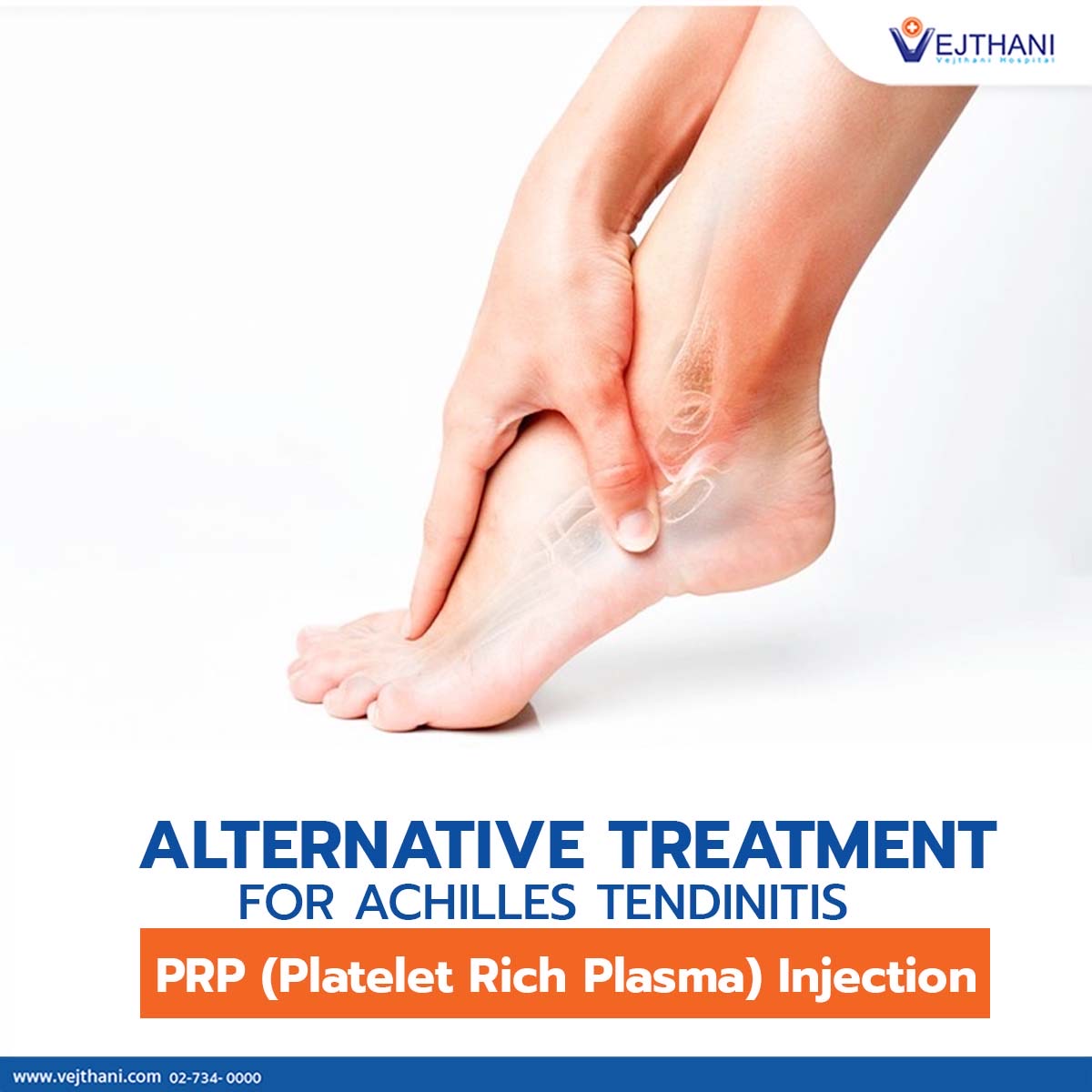
PRP Injection (Platelet Rich Plasma): Alternative Treatment for Achilles Tendinitis
Health Articles
Select Topic
Treating Achilles tendinitis or plantar fasciitis and chronic pain at the back of an ankle is no longer challenging. Currently, new medical innovation called PRP, or Platelet Rich Plasma injection is used to repair the injured area. This alternative treatment has been proven to be an effective method.
Plantar fasciitis commonly occurs in elderly patients. Initially, the treatment recommended by doctor is physiotherapy or reducing certain activities as well as losing weight and wearing external equipment such as silicone insoles and changing shoes. If no improvement shows after trying out the initial ways, the doctor will then suggest PRP or Platelet Rich Plasma injection.
How to Obtain PRP for Treatment
Doctor will collect blood from the patient and place it into a spinning device, separating other components of the blood from the platelets and the growth factors. The latter part will be used for treatment in the following ways:
Build collagens in injured areas for a faster healing process, i muscles, ligaments and bones.
Build small blood vessels to promote circulation in the affected areas for a faster healing process.
Act as an anti-inflammatory substance in the affected areas.
Limitations of Platelet Rich Plasma Injection
Patients who have anemia or a low platelet count
Those who have received steroid injection in that spot within the past month
Patients who have chronic pain should stop the intake of pain relievers and anti-inflammatory drugs 1 week before receiving the treatment.
Blood cell cancer or bone cancer patients
What is the PRP Treatment Recovery Time?
Normally, platelets reacts until 2-4 weeks. This depends on the injection site as well. Each site has different levels of effectiveness. These days, it is still recommended to inject only 1 shot and keep monitoring the symptoms. Essentially, he doctors will do a multidisciplinary treatment that includes changes in lifestyle, as well as muscle strengthening and stretching to increase muscles’ strength and flexibility. This is because the overall treatment may not be effective enough if it solely relies on platelet rich plasma. With medical innovations being continuously developed, platelet rich plasma injection is truly an effective treatment. Therefore, close monitoring by a team of doctors is crucial to achieve the most effective treatment.
For more information, please contact
Orthopedics Center, 2nd Floor, King of Bones Building, Vejthani Hospital Call +66 (0) 2734-0000 ext. 2298,2299 +66(0)85-223-8888 (English Hotline)
We use cookies to manage your personal information in order to provide you with the best personalized user experience on our website. If you continue using the website, we assume that you accept all cookies on the website. Find out more.