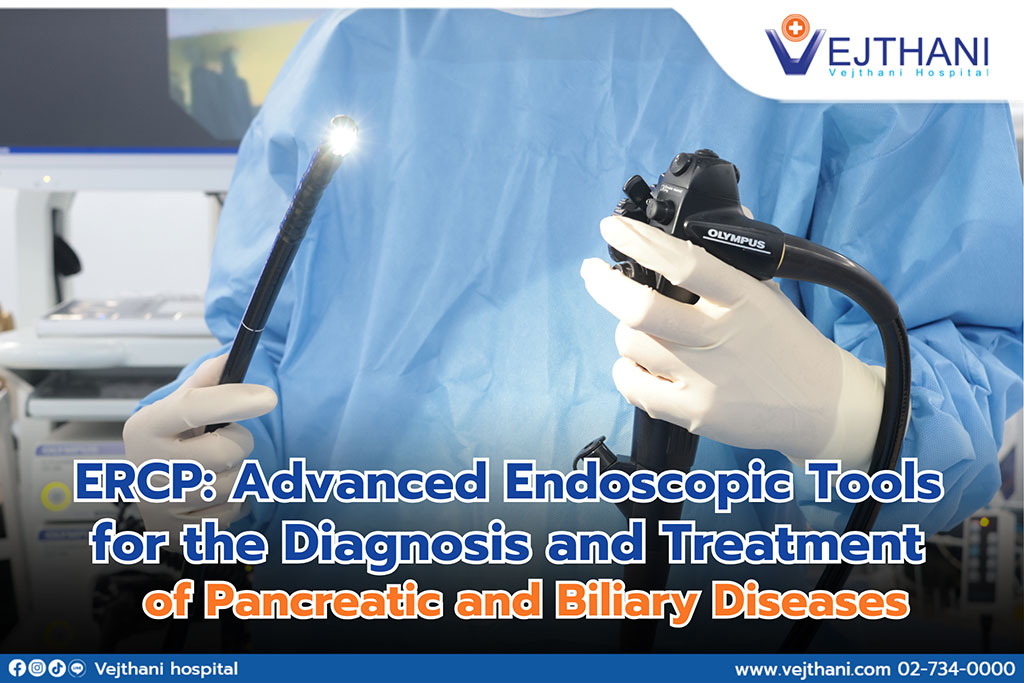
ERCP: Advanced Endoscopic Tools for the Diagnosis and Treatment of Pancreatic and Biliary Diseases
Health Articles
What is ERCP?
Endoscopic retrograde cholangiopancreatography, or ERCP, is a procedure to treat some diseases of bile ducts and pancreas. Doctors can view the inside of these organs and check for problems by using a special scope combined with contrast dyes and X-rays.
Why might I need ERCP? – Indications of ERCP
ERCP might be necessary to diagnose and treat the cause of unexplained abdominal pain or jaundice (yellowing of the skin and eyes). It can also provide additional information if you have pancreatitis or cancer affecting the liver, pancreas, or bile ducts.
Other indications that may be detected and treated with ERCP include:
Bile duct stones with or without cholangitis (infection of the bile duct)
Biliary strictures (narrowing of the ducts)
Leaks from the bile or pancreatic ducts
Tumors with biliary obstruction
Stones in the pancreatic duct
Acute pancreatitis due to biliary stone
Acute cholecystitis in some patients
ERCP may help you avoid surgery in some cases.
What are the risks of ERCP?
Be sure to tell your provider if you have allergies or sensitivities to medicines, contrast dyes, or iodine.
Possible complications of ERCP include:
Pancreatitis (inflammation of the pancreas) or cholecystitis (inflammation of the gallbladder)
Infection
Bleeding, Tears in the lining of the upper digestive tract
Biloma (collection of bile outside the biliary system)
Preparing for an ERCP
There are important steps you must take to get ready for your ERCP safely. These are general instructions. Be sure to follow any instructions given to you by your doctor.
Pre-procedural planning
Anesthesia preprocedural assessment
Anticoagulants and other medication review
Laboratory tests and imaging
Consent: the doctor informs about the details of the procedure, its benefits, and risks
Eating plan before procedure
Do not eat any solid food after midnight the night before your test.
Do not drink any liquids or water for three hours before your test.
Post-preprocedural care
Recovery room: After the procedure, you will be monitored in a recovery room until the effects of the medicine subside and you become more alert.
Dietary advice: Start with clear liquids initially and progress to a regular diet as tolerated.
For more information, please contact
Gastroenterology and Hepatology Center, Vejthani Hospital Call: (+66)2-734-0000 Ext. 2960, 2961, 2966 English Hotline: (+66)85-223-8888
We use cookies to manage your personal information in order to provide you with the best personalized user experience on our website. If you continue using the website, we assume that you accept all cookies on the website. Find out more.